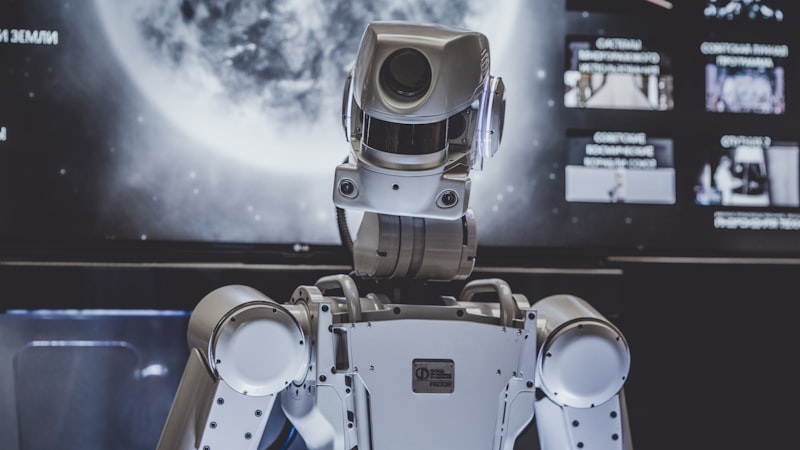
AI Agents for Manufacturing Fault Detection
The manufacturing industry is facing unprecedented challenges, from supply chain disruptions to increasing demand for quality and efficiency. Traditional methods of fault detection, often reliant on manual inspections and periodic testing, are proving insufficient.
Imagine a scenario where a critical component failure, undetected until final assembly, leads to a recall costing Ford Motor Company millions in lost revenue and damaged reputation. This is a stark reality many manufacturers grapple with.
However, Artificial Intelligence (AI) offers a powerful solution. AI agents, sophisticated software entities capable of perceiving their environment, making decisions, and acting to achieve specific goals, are emerging as a vital tool for proactively identifying and rectifying manufacturing defects.
These agents can analyze vast datasets from sensors, machinery, and quality control reports at speeds and scales humans cannot match, promising a future where production lines run with near-perfect precision.
This guide will equip developers and business leaders with the knowledge to implement AI agents for enhanced manufacturing fault detection, reducing waste, improving product quality, and boosting overall operational excellence.
The Promise of Intelligent Automation in Manufacturing Quality Control
The integration of AI agents into manufacturing quality control systems represents a significant leap forward from traditional approaches. Historically, quality assurance relied heavily on human inspectors, statistical process control (SPC), and periodic testing regimes.
While these methods have served the industry for decades, they possess inherent limitations. Human inspectors are prone to fatigue and subjective interpretation, leading to inconsistencies in defect identification.
“AI agents designed for real-time fault detection can reduce unplanned downtime by up to 40% while simultaneously improving defect identification accuracy — a critical advantage as manufacturers face shrinking margins and tighter quality standards.” — Dr. Sarah Chen, Director of Manufacturing Insights at McKinsey & Company
SPC, though valuable for monitoring trends, often identifies issues after a significant number of defective products have already been manufactured. Periodic testing can miss intermittent faults that only appear under specific operating conditions.
AI agents, by contrast, offer continuous, objective, and highly granular analysis.
These agents can be trained on historical data – including images of good and defective parts, sensor readings from machinery, and environmental conditions during production – to learn the intricate patterns associated with faults.
This enables them to detect anomalies in real-time, often before they manifest as significant production issues.
For instance, an AI agent analyzing vibrational data from a CNC machine could detect subtle changes indicative of a worn bearing long before it causes a catastrophic failure, saving costly downtime and preventing the production of out-of-spec parts.
Companies like General Electric have already seen substantial benefits, reporting significant improvements in predictive maintenance and reduced unscheduled downtime by deploying AI-powered monitoring systems on their industrial equipment.
The ability of these agents to process and interpret multi-modal data streams – from visual inspections to acoustic signatures – provides a holistic view of the manufacturing process, allowing for more accurate and timely fault identification.
Real-time Anomaly Detection with Computer Vision
One of the most impactful applications of AI agents in manufacturing fault detection is through computer vision. These agents can be trained to scrutinize product images and identify visual defects that might be imperceptible to the human eye.
This includes microscopic cracks, surface imperfections, inconsistent surface finishes, or incorrect component placement. By integrating cameras directly into the production line, AI agents can perform 100% inspection of every unit produced, rather than relying on random sampling.
For example, an AI agent developed using a segmentation-saliency-detection model could analyze images of manufactured electronic components. It would be trained to recognize the precise outlines and features of a correctly assembled circuit board.
Any deviation, such as a misplaced resistor, a solder bridge, or a missing component, would be flagged immediately. This level of automated visual inspection can drastically reduce the rate of defects reaching consumers, enhancing brand reputation and customer satisfaction.
The MIT Technology Review highlighted how AI-powered visual inspection systems are becoming increasingly sophisticated, capable of identifying defects with accuracy rates exceeding 99% in many industrial settings.
This precision not only prevents faulty products from shipping but also provides valuable feedback to the production process, enabling engineers to identify root causes and implement corrective actions swiftly.
Predictive Maintenance Through Sensor Data Analysis
Beyond visual inspection, AI agents excel at analyzing sensor data to predict potential equipment failures before they occur. Modern manufacturing facilities are equipped with a plethora of sensors that monitor parameters such as temperature, pressure, vibration, current, and power consumption. These raw data streams, often voluminous and complex, can be interpreted by AI agents to identify subtle patterns that correlate with impending mechanical issues.
Consider a scenario involving a robotic arm on an assembly line. Sensors might detect a gradual increase in motor current, a slight change in vibration frequency, or a rise in operating temperature. Individually, these might seem insignificant.
However, an AI agent trained on historical data associated with similar patterns and subsequent equipment failures can correlate these subtle shifts. It can predict, with a high degree of confidence, that a specific motor bearing is likely to fail within the next 72 hours.
This allows maintenance teams to schedule repairs proactively during planned downtime, avoiding costly emergency shutdowns and production interruptions.
Companies like Siemens are actively deploying AI-driven predictive maintenance solutions, reporting substantial reductions in maintenance costs and improvements in equipment uptime, with some case studies indicating savings upwards of 20% on maintenance budgets.
The ability to anticipate failures rather than react to them is a cornerstone of modern industrial efficiency.
Developing and Deploying AI Agents for Manufacturing Fault Detection
Implementing AI agents for manufacturing fault detection requires a structured approach, encompassing data preparation, model development, and deployment. This process involves collaboration between AI/ML engineers, data scientists, and manufacturing domain experts to ensure the agents are both technically sound and practically relevant to the production environment.
The initial phase is data collection and preprocessing.
This involves gathering all relevant data sources, which can include high-resolution images from cameras, time-series data from sensors (e.g., vibration, temperature, pressure), audio recordings of machinery, and historical quality control logs.
The data must be cleaned, normalized, and labeled accurately. For instance, images of manufactured parts need to be labeled as either “good” or “defective,” with specific types of defects identified and annotated if possible.
Sensor data might require filtering to remove noise or recalibration to ensure consistency. The quality and completeness of this training data are paramount to the success of any AI agent.
Organizations are increasingly turning to specialized data management platforms to handle the sheer volume and variety of data generated in modern factories.
Following data preparation, the next step is model selection and training. The choice of AI model depends on the type of data and the specific fault detection task. For image-based defect detection, Convolutional Neural Networks (CNNs) are highly effective.
For time-series sensor data, Recurrent Neural Networks (RNNs) or Transformer-based models might be more suitable. Developers can leverage existing pre-trained models or build custom architectures.
Tools like Polyaxon can assist in managing the complex workflows associated with training and experimenting with various machine learning models at scale, offering MLOps capabilities that are crucial for industrial applications.
The training process involves feeding the preprocessed data into the selected model and iteratively adjusting its parameters to minimize errors. This is where the agent learns to distinguish between normal operating conditions and anomalous states indicative of defects.
Data Annotation and Feature Engineering
A critical, yet often underestimated, part of developing AI agents for fault detection is data annotation and feature engineering. For visual inspection tasks, accurate annotation is key.
This means not only labeling an image as defective but also precisely outlining the location and type of the defect. Tools like segmentation-saliency-detection can aid in this process by automatically identifying areas of interest within images, reducing manual annotation effort.
For sensor data, feature engineering involves creating new variables from the raw data that might be more informative for the model.
For example, instead of just using raw vibration readings, one might engineer features like the root mean square (RMS) of the vibration signal, or specific frequency components derived from a Fast Fourier Transform (FFT).
The jina-ai platform, for instance, is designed to help build multimodal AI applications and can assist in processing and extracting meaningful features from diverse data sources, including images and sensor streams.
Model Evaluation and Validation
Once a model is trained, it must be rigorously evaluated and validated using a separate dataset that the model has not seen during training. Key performance metrics for fault detection include precision, recall, F1-score, and accuracy.
Precision measures the proportion of correctly identified defects out of all instances flagged as defects. Recall measures the proportion of actual defects that were correctly identified.
An AI agent with high precision will minimize false positives (flagging a good part as defective), while an agent with high recall will minimize false negatives (missing actual defects).
The Stanford HAI’s research on AI in manufacturing frequently emphasizes the importance of robust validation to ensure models generalize well to unseen data and diverse operating conditions.
It’s common to see deployment of models with recall targets exceeding 95% for critical defects, ensuring that few faulty items proceed down the production line.
Deployment and Continuous Monitoring
After successful validation, the AI agent needs to be deployed into the manufacturing environment. This can involve integrating the agent into existing SCADA systems, PLC controllers, or dedicated edge computing devices.
EasyCode can assist developers in rapidly prototyping and deploying machine learning models by providing streamlined coding and integration capabilities, especially useful for embedding AI into operational technology (OT) environments. Once deployed, continuous monitoring is essential.
The performance of the AI agent should be tracked over time, and the model may need to be retrained periodically as new data becomes available or as production processes evolve.
This concept, known as continuous learning or model drift management, is vital to maintain the agent’s effectiveness.
Companies like AWS offer services that facilitate the deployment and ongoing management of machine learning models at the edge and in the cloud, supporting the full lifecycle of AI in industrial settings.
Real-World Applications and Case Studies
The adoption of AI agents for manufacturing fault detection is not just theoretical; it’s driving tangible improvements across various industries. In the automotive sector, manufacturers are using AI to inspect critical components like welds, paint finishes, and engine parts.
For example, Tesla reportedly employs AI vision systems for quality control on its production lines, analyzing millions of images to detect even minor deviations from quality standards. This allows them to maintain high production throughput while ensuring product integrity.
In the electronics manufacturing space, AI agents are instrumental in detecting soldering defects, component misplacements, and circuit board anomalies. Companies producing sensitive medical devices, where precision and reliability are paramount, are heavily investing in AI-driven inspection.
A study published on arXiv detailed how an AI system successfully identified subtle micro-fractures in semiconductor wafers that were previously missed by traditional inspection methods, thereby preventing downstream product failures.
The ability of AI agents to adapt and learn from data makes them particularly valuable in these high-stakes environments.
The aerospace industry, with its stringent safety and quality requirements, is another significant adopter. AI agents are used for inspecting complex aircraft components, detecting fatigue cracks, and ensuring the adherence to precise manufacturing tolerances.
The integration of AI here not only enhances safety but also reduces the costs associated with manual, time-consuming inspections.
This technology promises to extend to the entire product lifecycle, from design validation to in-service monitoring and maintenance, a trend highlighted by Gartner reports on the future of manufacturing.
Practical Recommendations for Implementing AI Agents
For businesses looking to integrate AI agents into their manufacturing fault detection strategies, several actionable recommendations can guide the process.
First, start with a clearly defined problem and a pilot project. Trying to solve every quality issue at once with AI is rarely effective. Identify a specific, high-impact fault that is currently difficult or costly to detect. Then, initiate a pilot program focused solely on that problem. This allows for focused learning, demonstrates early success, and builds momentum for broader adoption.
Second, prioritize data quality and accessibility. AI agents are only as good as the data they are trained on. Invest time and resources into establishing robust data collection, cleaning, and annotation pipelines.
Ensure that relevant data from sensors, cameras, and historical records is readily accessible to the AI development team.
For developers needing to analyze complex point cloud data for quality inspection, tools like yochengliu-point-cloud-analysis can be invaluable.
Third, foster cross-functional collaboration. Successful AI implementation in manufacturing requires close cooperation between AI/ML experts, data engineers, IT infrastructure teams, and, crucially, the domain experts on the factory floor.
These are the individuals who understand the nuances of the production process and can provide invaluable context for AI development and validation. They can leverage tools like webchatgpt for collaborative problem-solving and knowledge sharing.
Fourth, consider edge computing for real-time analysis. For applications requiring immediate defect detection and response, deploying AI agents on edge devices directly on the production line is often necessary. This minimizes latency associated with sending data to the cloud and back.
The ai-cyberwar agent, while focused on cybersecurity, demonstrates the principle of localized AI processing for critical tasks. For the manufacturing context, edge AI ensures rapid decision-making without reliance on network connectivity.
Finally, plan for continuous monitoring and retraining. The manufacturing environment is dynamic. Production processes change, new materials are introduced, and equipment wears over time. AI models need to be monitored for performance degradation and retrained periodically with updated data to maintain their accuracy and relevance. Platforms like doc-search can help manage and version control the documentation for these AI models and their training datasets.
Common Questions About AI Agents in Manufacturing Fault Detection
How can AI agents help reduce scrap and rework rates in manufacturing? AI agents significantly reduce scrap and rework by identifying defects at the earliest possible stage of production.
For instance, a computer vision agent inspecting components during assembly can flag a misplaced part immediately, preventing it from being incorporated into a larger, more complex assembly that would then require costly disassembly and rework.
Predictive maintenance agents can prevent machinery failures that often lead to batches of defective products. According to a McKinsey report, AI-driven quality improvements can lead to a reduction in defects by up to 30%.
What are the most common types of defects AI agents are used to detect? AI agents are versatile and can detect a wide range of defects. For visual inspection, these include surface imperfections (scratches, dents, cracks), color inconsistencies, incorrect assembly (misplaced components, missing parts), and deviations in shape or size.
For sensor data analysis, they detect anomalies indicative of mechanical wear, electrical faults, or process deviations (e.g., incorrect temperature or pressure).
For instance, vision-agent can be trained on specific defect types within images relevant to a particular manufacturing process.
Is it feasible to implement AI agents for fault detection in small or medium-sized enterprises (SMEs)? Yes, it is increasingly feasible for SMEs. While large enterprises have historically led AI adoption, the availability of cloud-based AI platforms, pre-trained models, and more accessible AI development tools has lowered the barrier to entry.
SMEs can start with specific, well-defined problems and utilize cost-effective cloud services for training and deployment, potentially avoiding significant upfront hardware investments. Partnering with AI solution providers that specialize in SME needs can also be a viable strategy.
What kind of data is required to train an AI agent for effective fault detection? The type of data depends on the specific application. For visual defect detection, high-resolution images or videos of both good and defective products are essential.
For predictive maintenance, time-series sensor data (vibration, temperature, pressure, current, etc.) from operational machinery is critical. Historical quality control records, production logs, and maintenance reports also provide valuable contextual information.
The more diverse and representative the data, the more robust and accurate the AI agent will be.
Developers working with unstructured data like scanned documents related to quality reports might find chat-with-scanned-documents useful for extracting key information.
The integration of AI agents into manufacturing fault detection represents a pivotal moment for the industry. By moving from reactive to proactive quality management, companies can achieve unprecedented levels of efficiency, reduce waste, and enhance product reliability.
The insights provided in this guide are designed to offer a clear roadmap for developers and business leaders looking to embark on this journey. The technology is maturing rapidly, with ongoing advancements in areas like explainable AI (XAI) further increasing trust and adoption.
Embracing AI agents is not merely an option for staying competitive; it is becoming a necessity for achieving excellence in modern manufacturing.